
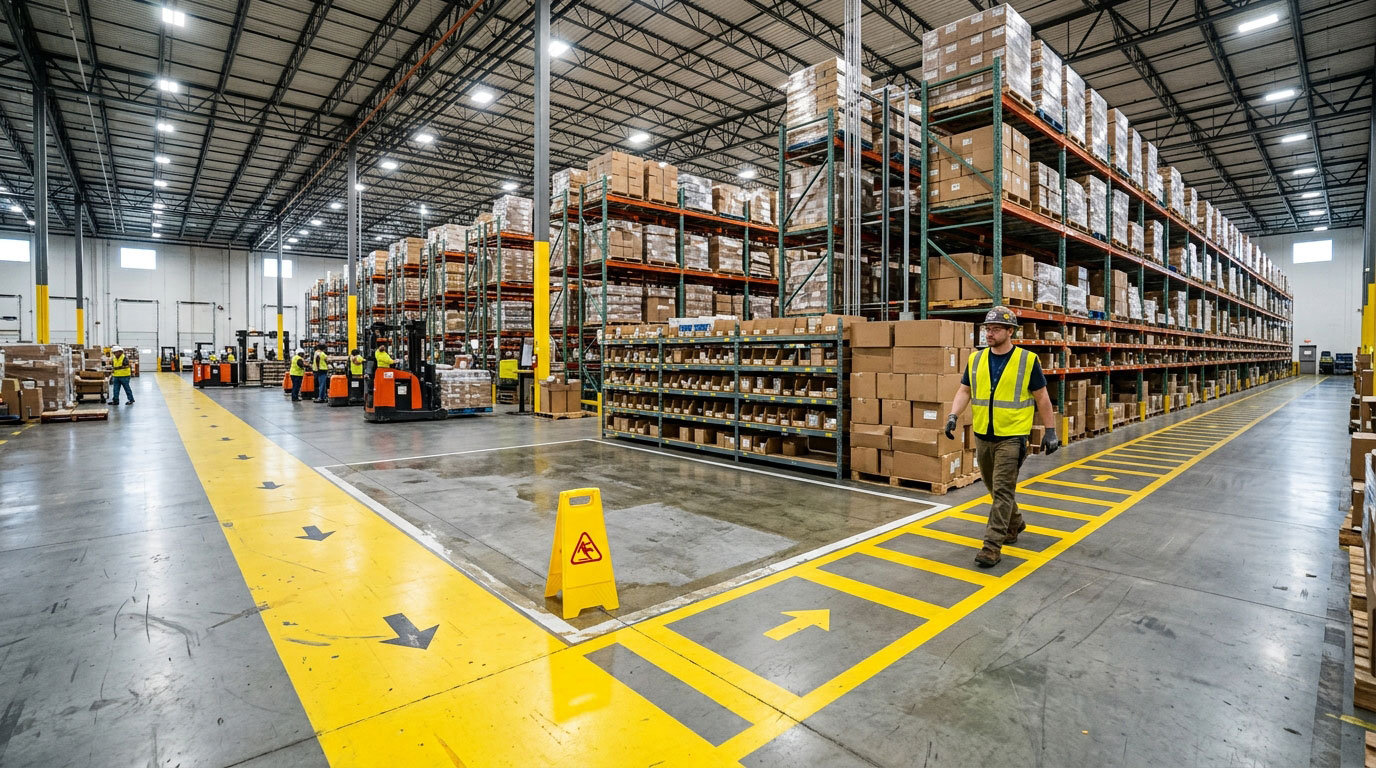
Slips, trips, and falls can occur in almost any workplace. A wet floor in an office entrance, an extension cord across a walkway, an uneven warehouse surface, an obstructed stairway, or an unprotected elevated edge can create conditions that lead to serious injuries.
The issue remains a current workplace safety priority. In August 2026, the Occupational Safety and Health Administration (OSHA) announced the renewal of its National Emphasis Program for warehouses and distribution centers. Among the hazards receiving attention are walking-working surfaces, including slips, trips, and falls.
Understanding where these hazards develop is an important part of preventing workplace injuries.
What Is the Difference Between a Slip, Trip, and Fall?
Although the terms are often grouped together, slips and trips generally occur in different ways.
A slip typically happens when there is too little traction between a person’s footwear and the walking surface. Water, oil, grease, dust, ice, or another substance can reduce traction.
A trip usually occurs when a person’s foot strikes or catches on an obstacle or uneven surface, interrupting normal movement.
Either event can result in a fall. Falls may happen on the same level or from one level to another, such as from stairs, ladders, platforms, roofs, loading areas, or other elevated surfaces.
Common Causes of Workplace Slips and Trips
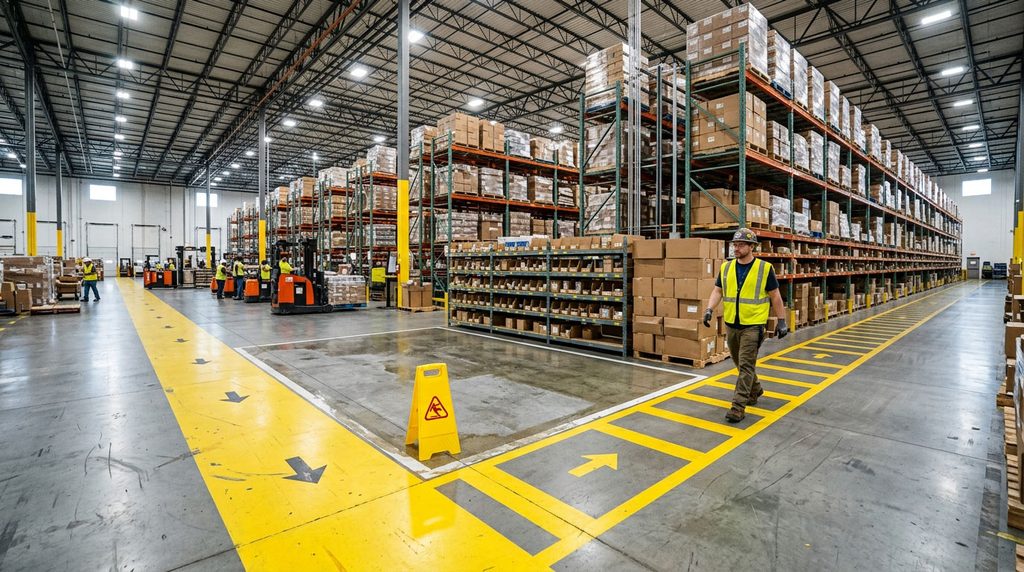
Workplaces change throughout the day. Deliveries arrive, materials are moved, equipment is used, weather is tracked indoors, and maintenance tasks create temporary conditions. A safe walkway in the morning may become hazardous later.
Wet or Contaminated Floors
Spills are among the most recognizable slip hazards, but water is not the only concern. Oils, food, chemicals, dust, loose materials, and cleaning products can also affect traction.
Building entrances may become particularly hazardous during rain or snow when moisture is carried indoors on footwear.
Clutter and Obstructed Walkways
Boxes, tools, hoses, extension cords, packaging, pallets, and equipment placed in walking areas can create trip hazards.
Even objects that workers know are present can become dangerous when someone is carrying materials, moving quickly, working in reduced lighting, or approaching from a different direction.
Uneven Walking Surfaces
Damaged flooring, raised edges, potholes, loose mats, broken pavement, abrupt elevation changes, and uneven transitions between surfaces can interrupt a person’s stride.
Poor Lighting Can Make Other Hazards Harder to See
A relatively small obstacle may become more difficult to detect in stairwells, storage rooms, outdoor work areas, parking facilities, or other poorly illuminated locations.
Employers and safety personnel should therefore consider lighting as part of evaluating walking-working surfaces.
Why Falls From Height Require Particular Attention
Some workplace falls occur on a level surface, while others involve ladders, scaffolds, stairs, roofs, platforms, loading docks, elevated equipment, or openings.
Falls from elevation can result in particularly severe injuries because the worker may strike the floor, equipment, structural components, or other objects below.
OSHA’s walking-working surfaces standards address slip, trip, and fall hazards across many general-industry workplaces and include requirements related to inspection, training, and fall protection.
Create Safer Walking-Working Surfaces
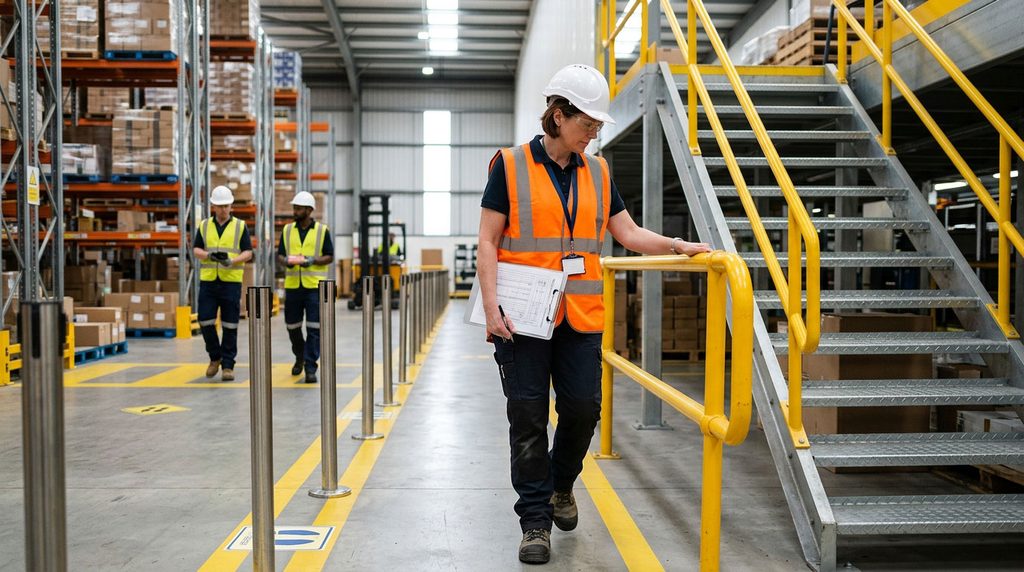
Prevention often begins with keeping walking routes predictable, visible, and clear.
Respond to Spills Promptly
When a spill occurs, the affected area should be addressed according to workplace procedures. Temporary warnings can help alert people while the hazard is being corrected, but warning signs should not substitute for removing the condition when it can be safely addressed.
Keep Pedestrian Routes Clear
Work areas should provide appropriate locations for tools, materials, waste, cords, hoses, and equipment so employees are not routinely required to navigate around obstacles.
In warehouses and industrial environments, clearly defined pedestrian routes can also help separate workers on foot from forklifts and other moving equipment.
Inspect Floors, Stairs, and Walking Areas
Regular inspections can identify loose flooring, damaged steps, worn surfaces, missing handrails, inadequate lighting, obstructed exits, and other conditions before an incident occurs.
The frequency of inspection may depend on the type of workplace and how quickly hazards can develop.
Visit InjuryWatchdog.com’s Workplace Safety section for additional articles about occupational hazards and prevention.
Footwear Can Affect Traction
Appropriate footwear is another part of fall prevention. The type of shoe suitable for an office may differ considerably from footwear needed in a kitchen, warehouse, construction environment, manufacturing facility, or outdoor workplace.
Workers should follow any job-specific footwear requirements and replace footwear when soles become excessively worn or damaged.
Ladder Safety Deserves Separate Attention
Ladders are common in workplaces, which can make their risks easy to underestimate. Problems can arise when workers use the wrong ladder for a task, place it on an unstable surface, stand too high, overreach, carry awkward materials while climbing, or use damaged equipment.
Inspect Before Use
A basic pre-use inspection can help identify damaged rungs, feet, locking mechanisms, rails, or other components. Defective ladders should be handled according to workplace safety procedures rather than returned to normal use.
Avoid Improvised Height Solutions
Chairs, boxes, shelving, buckets, and other objects are not substitutes for appropriate access equipment. Using an improvised platform can create an unstable working surface and increase fall risk.
Training Helps Workers Recognize Changing Hazards
Physical improvements are important, but employees also need to know how to recognize and report hazards.
Effective workplace safety training should reflect the actual environment employees encounter. Workers may need information about spill response, housekeeping, ladder use, elevated work, pedestrian routes, footwear, or other hazards specific to their tasks.
Employees should also know how to report conditions that cannot be corrected immediately.
Housekeeping Is an Ongoing Safety Practice
Good housekeeping is not simply about how a workplace looks. Organized work areas make it easier to keep walkways clear, identify hazards, prevent materials from accumulating, and maintain access to exits and safety equipment.
In busy operations, housekeeping should occur throughout the workday rather than only after work is completed.
Prevention Works Best Before Someone Falls
A near miss can be an important warning. If someone slips without falling, catches a foot on an obstacle, or nearly loses balance on a stairway, the event may reveal a condition capable of causing a more serious incident later.
Identifying the underlying hazard rather than dismissing the incident can strengthen prevention efforts.
Slips, trips, and falls are common workplace hazards, but many contributing conditions can be identified and addressed through regular inspections, good housekeeping, proper equipment, appropriate footwear, worker training, and attention to walking-working surfaces.
For related safety information, explore our Workplace Safety articles, read about recent consumer product recalls, or review everyday habits that may help reduce road accidents.